
Prior to its development in the 1880s as a luxury seaside resort, the Coronado peninsula was a brush-covered sandspit accessible only by rowboat. To create the lush landscape desired for the site, local horticulturist Kate Sessions selected hardy, drought-tolerant plants from comparable coastal climates like Mexico and the Canary Islands. When the Hotel del Coronado opened in 1888, its grounds boasted ornamental and specimen species that had not yet been planted in California.
Envisioned as a tropical garden at the heart of the hotel by developers Elisha Spurr Babcock and Hampton Story, and created by Sessions, a rectangular courtyard was filled with rich arrangements of palms, cycads, ferns, birds of paradise, and other exotic species. Designed by architects James and Merritt Reid, verandas and red cupolas jut out of the hotel’s white-clapboard façade to overlook the central courtyard gardens below. Between the hotel and the ocean, terraces give way to an elliptical, open lawn and colorful, low-lying plantings. Sandy berms planted with aloe and agave protect the beachfront lawn from erosion. Plantings along the resort’s meandering pathways echo Sessions’ original plant palette, and a dragon tree planted by Sessions along the Vista Walk is considered one of the hotel’s most iconic landscape features. Although the 28-acre property has been updated and renovated on several occasions, many of Sessions’ key specimen plants and primary design elements remain. Hotel del Coronado was listed in the National Register of Historic Places in 1971 and became a National Historic Landmark in 1977.
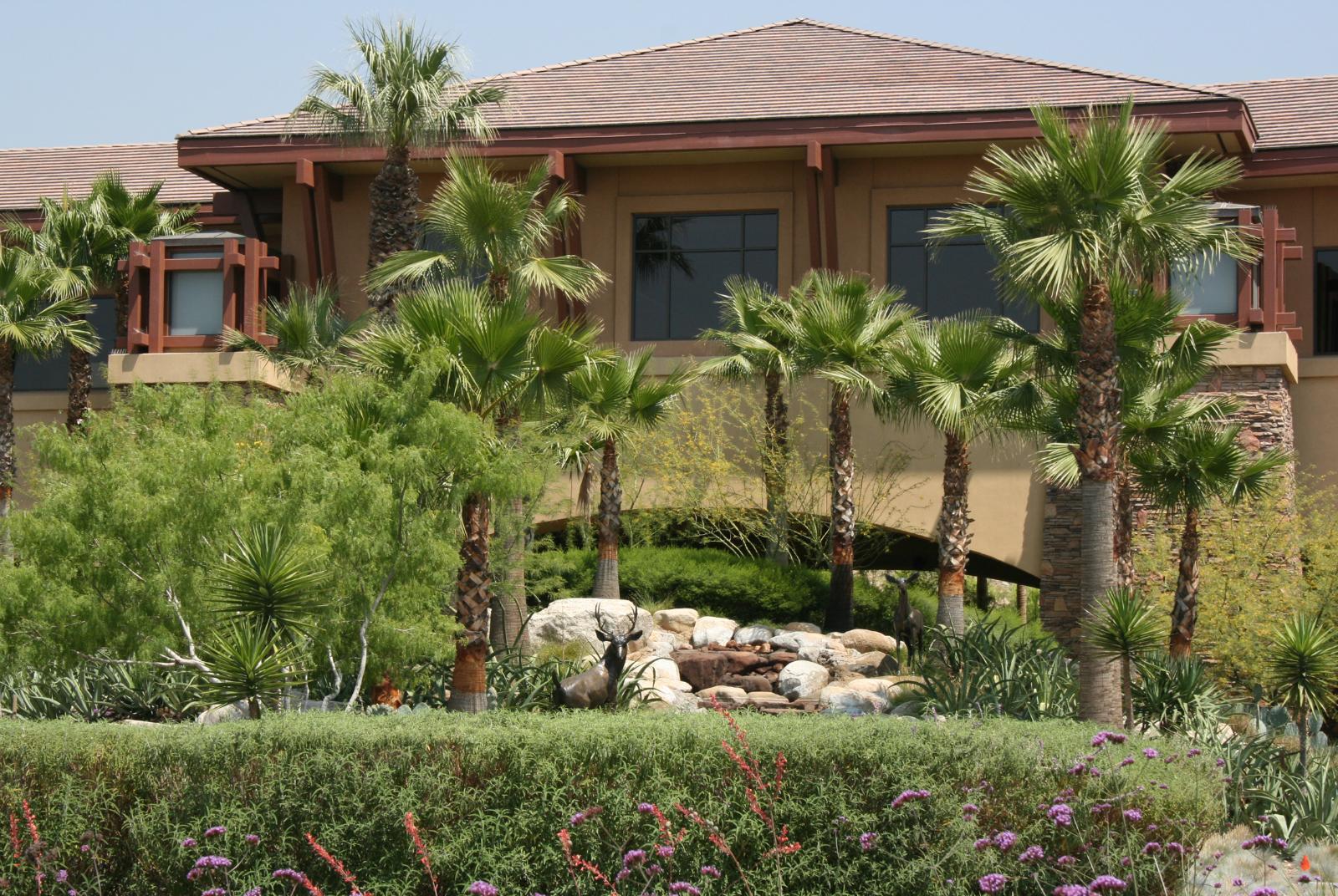
Yaamava' Resort Casino is an Indian gaming casino owned by the San Manuel Band of Mission Indians, The casino is located in San Bernardino County about an hour from downtown Los Angeles in the city of Highland, California. Marina designed and installed the landscape for this project with Reyes Construction.